

No1 Poultry - London - Study
No1 Poultry is a Postmodern commercial building designed by Sir James Stirling and Michael Wilford + Associates in 1985-88 and finally constructed 1998 by Michael Wilford and Partners, following Stirling’s death in 1992. It is situated within the prolific Bank conservation area London, on a wedge-shaped site that replaced the Mappin & Webb building designed by John Belcher. The site is constructed of well-known Classical architecture such as the Bank of England, Mansion House, Midland Bank Head Office and National Westminster Bank.
Inevitably for a high-profile building in a highly sensitive location, the site had a history of planning battles. A Mies Van der Rohe tower and plaza design was refused permission. This led to the design of Stirling’s No1 Poultry and despite the final approval from the Secretary of State, the proposal received mixed acclaim with conservationists considering it a poor replacement for the existing listed building. Mainly due to the contrasting Postmodern appearance, its triangular and coloured walls and the striped façades was questioned. Because of this contrasting nature with the site it was criticised and less appreciated by the public, mainly the Layperson. Positive submissions in favour of the proposal were brought to light due to its clever reference to Classical architecture resulting in the final approval. It is this mixed acclaim further investigation is required to understand how this building influences human experience, particularly of the Layperson and ultimately determine the success or failure on the site.
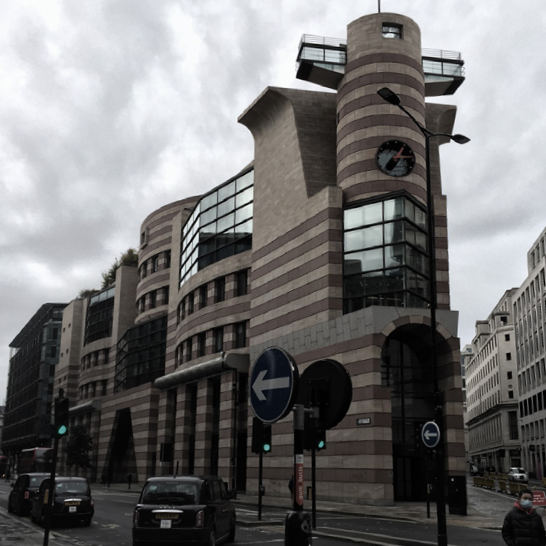
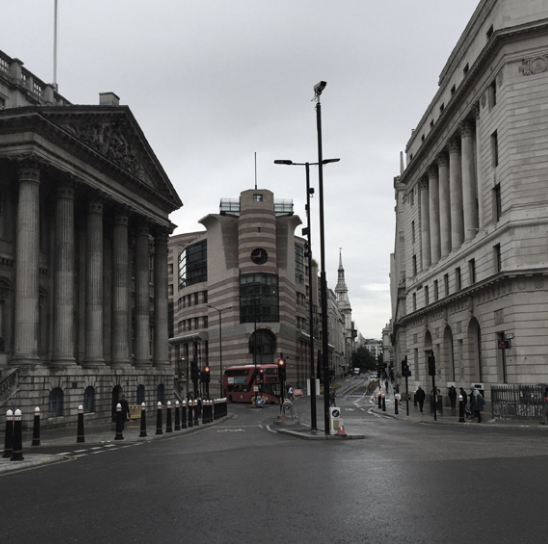
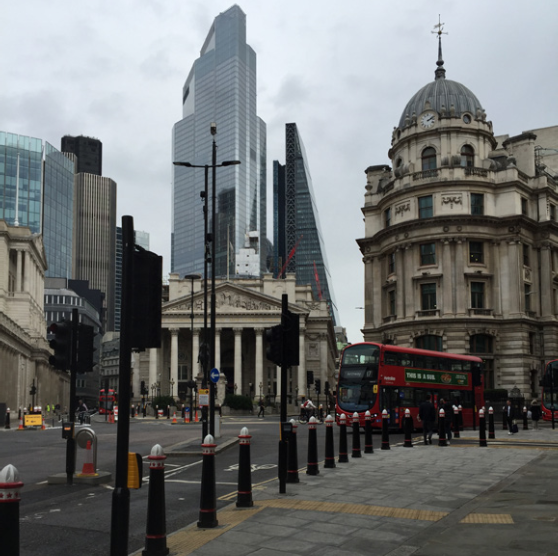
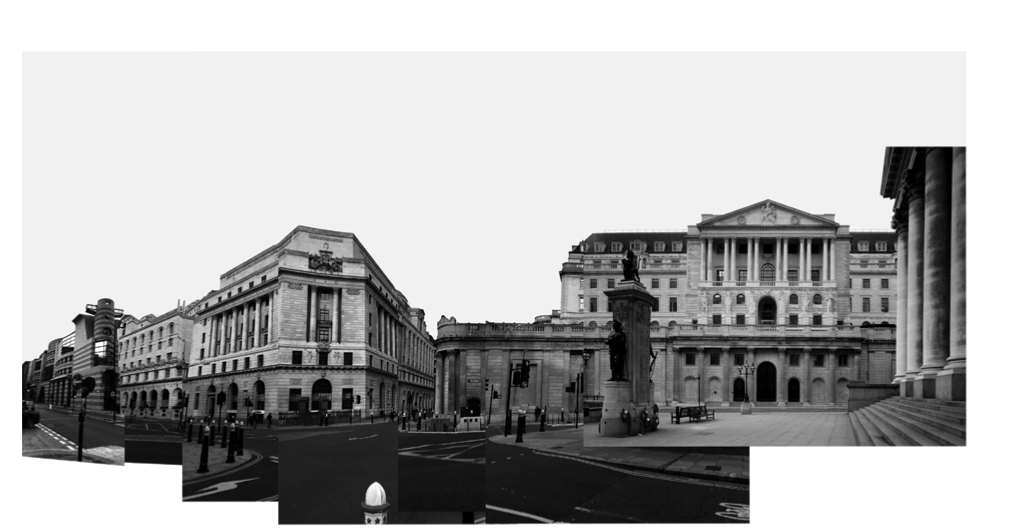
Site Photographs
To fully understand its relationship with the prolific site and architectural language, stripping back the dominant colour, layering and haptic qualities of the building would allow a way into Stirlings thinking. The main architectural elements clearly defined are the stone panel bonding/design, horizontal banding (sting course/parapet), and Vertical elements (columns/piers). These elements are defined in the surrounding buildings particularly to Classical reference. Stirling had to rely on these architectural forms to create a dialogue to its context. There is a clear Classical precedent (despite abstracted) of horizontal and vertical divisions of the façades. With this similarity of architectural form, associations between the buildings are triggered forming a Locus. Aldo Rossi in The Architecture of the City (1982) explains, “the Locus is a relationship between a certain specific location and the buildings that are in it.” And is the characteristic principle which forms experiential moments that the Layperson can understand. The stone bonding and horizontal/ vertical architectural forms is the Locus due to its Classical precedent and repetition in this context.
The stone panel was designed in a way in which it relates to the other stone bonding across the site. The scale, shape and design of each type of bonding within the immediate context could fit in the same setting. Composing a drawing with the same colour and finish takes away Stirling’s panels’ dominant visual appearance expressing the architectural dialogue within the site. The main design elements which emphasise this connection is the articulated shadow gap to the top of the panel and minimal grout lines forming smoothness/consistency horizontally. Having the emphasised shadow gap at the top of the panel forms a relief which creates a feeling of assembly and heaviness where each piece of stone meets. This is conveyed in the stonework of the City of London Magistrates Court, Mansion House and the National Westminster Bank. Furthermore, the minimal mortar lines are profound in the Bank of England and 1 Lombard Street. In matching these characteristics, the stone panel design and bonding creates relationships to the surrounding buildings.
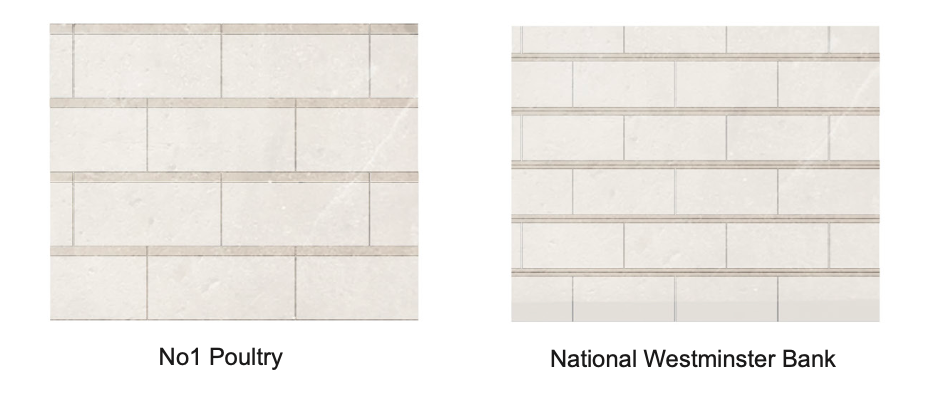
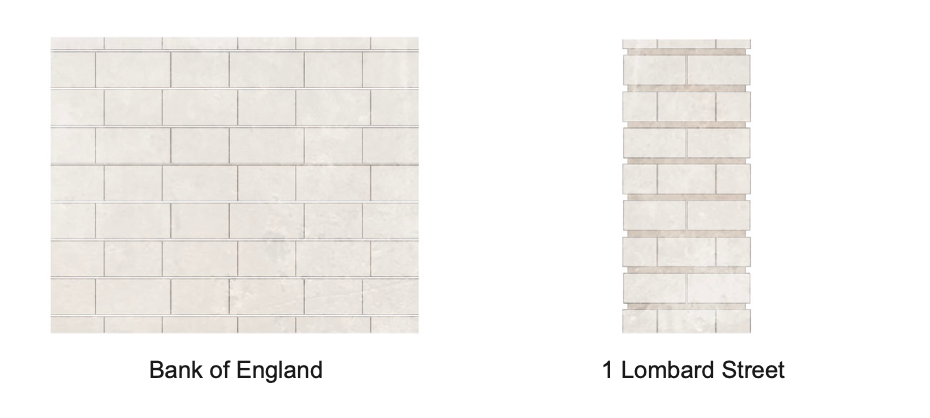
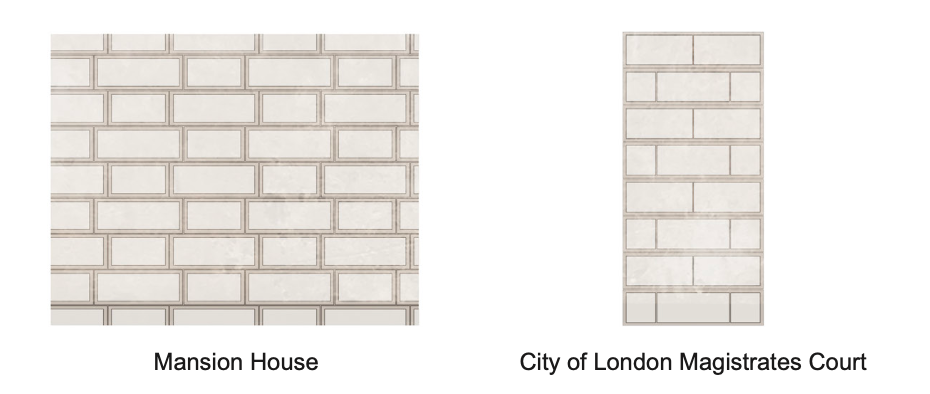
Stone bonding across the site
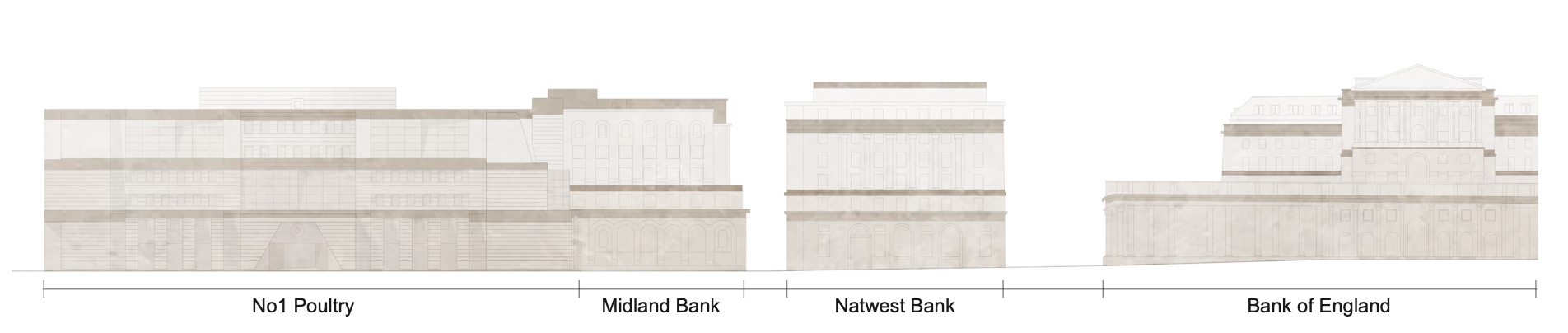
Stirling recognised the expressed horizontal elements such as string courses, banding and parapets across the surrounding buildings to continue the language of the site. Three prominent horizontal elements set up No1 Poultry. Firstly, the giant bull-nosed stringcourse of grey granite separates the colonnades from the upper floors. Being the closest to the street level, it needed to be the most accentuated element to set out this correlation with the surrounding buildings. With its profound bull-nose, change in colour, type of stone and almost the same height as the first string course of the National Westminster Bank, the Layperson can get a sense of its relationship. The next horizontal element is the string course where the red sandstone stops below the V-shaped glass bays. This is emphasised by the colour layering rhythm stopping at a large face of rusticated buff sandstone to the top of the building splitting the building into three levels, which is apparent to the rest of the site. The last horizontal element is the parapet. This element forms the top of the building and acknowledges the surrounding buildings by being the lowest in the set. This allows the building to sit below the others in scale and hierarchy comfortably in the site, despite its appearance.
This allows the Layman to recognise this link within the surrounding Classical buildings and then apply this to the proposed abstract Classical forms which Stirling intended. The use of architectural forms as the Locus connects with the site’s identity, persevering the language and historic nature ultimately enhancing the quality of the surrounding buildings. Tectonic expression in which artefacts are derived from architectural forms and design creates honesty and identity. These are only some ways to read or understand the building, the dominant colour and layering needs to be questioned.
The proposal came under a large amount of debate due to its conflicting nature of tactile, colour and geometrical forms against the surrounding buildings. Our experience is defined by our eyes identifying surfaces, contours, edges and the tactile sensation determining the agreeableness or unpleasantness of the place. As shown in the site photographs, these elements are dominant and primary within the place acting as a frontal encounter to Layperson. This was acknowledged personally during my first experience of the building where the colours and layering of the stone panels were so dominant and contrasting that it created an unpleasant experience towards the building. There is a clear difference in the colour and tactile quality of the stone panels compared to the surrounding buildings. This is enforced by the alternating bands of colour from the rusticated buff and red sandstone disrupting the visual perception of materiality. Due to this, it could be argued that Stirling’s tectonic approach is honest compared to its context.
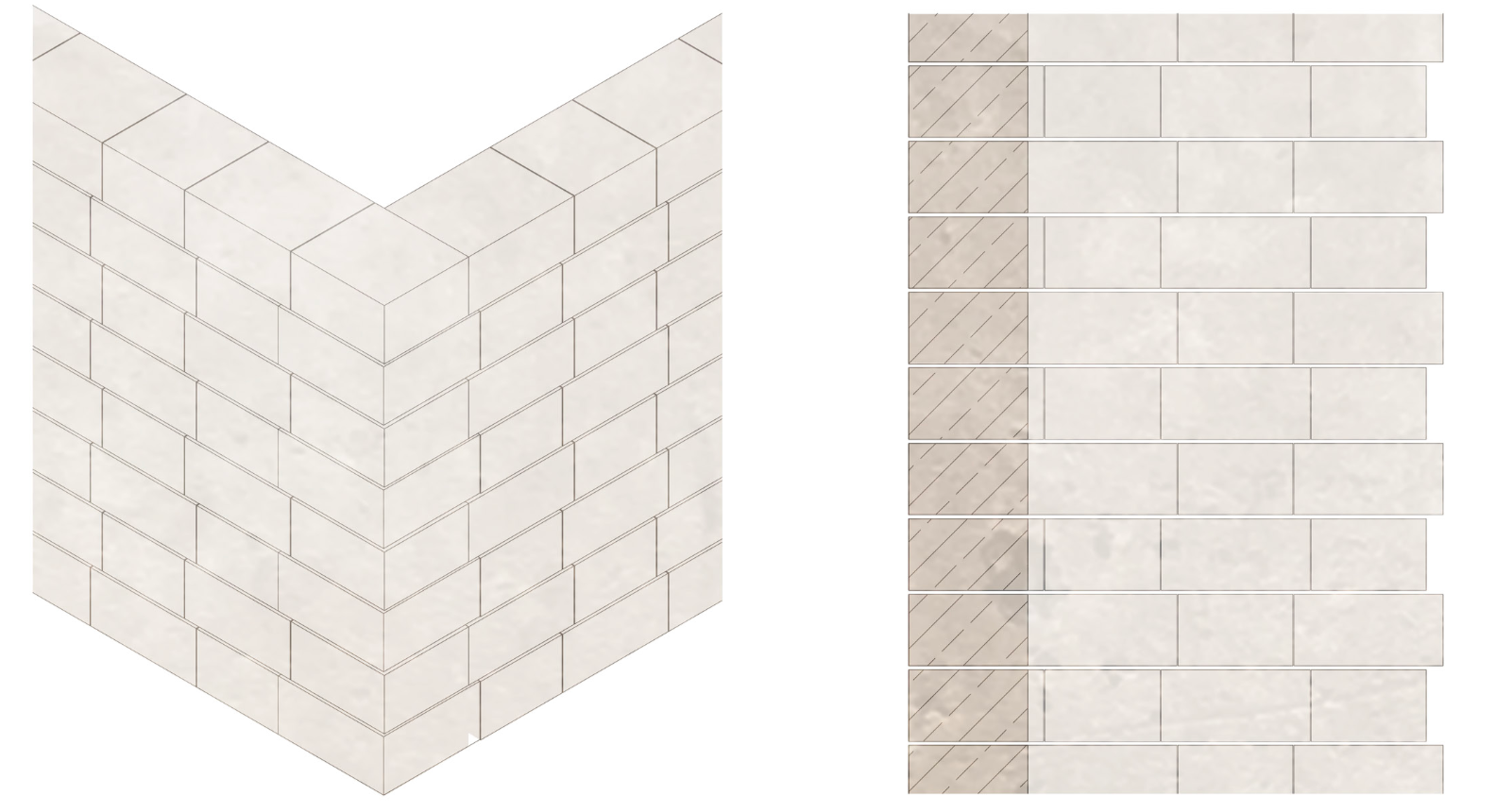
Looking at the set of existing buildings adjacent there is a Classical sense in which relationships are created through form, proportion and material trying to bind together as a whole; however, due to these visual qualities driving their tectonic approach it has created a somewhat random collection of buildings in a row. It is this division of representation which questions these buildings based on surface and appearance rather than the tectonic honesty by Stirling. This randomness or division in representation is difficult for the Layperson to understand because the load-bearing stone and stone-clad construction within the site have been designed to visually express similar joints and material haptic qualities. Due to the very similar aesthetic and appearance through the use of stone, experiential moments are formed which the Layperson can understand, acknowledge and appreciate.
Horizontal elements across the site
There is also a range of vertical elements mainly consisting of columns and piers. Being fundamental architectural feature within Classical buildings, Stirling predominantly used this through the colonnade in the lower level and continued up through piers around the windows. Multiple vertical elements are accentuated throughout the site. These elements are connected through a rhythm that expresses a relief of massiveness and dramatic shadows. Steen Eiler Rasmussen in Experiencing Architecture (1959) explains when the Layperson experiences these moments they can recreate the phenomena and reapply this observation to different objects with the same characteristics.

Vertical elements across the site
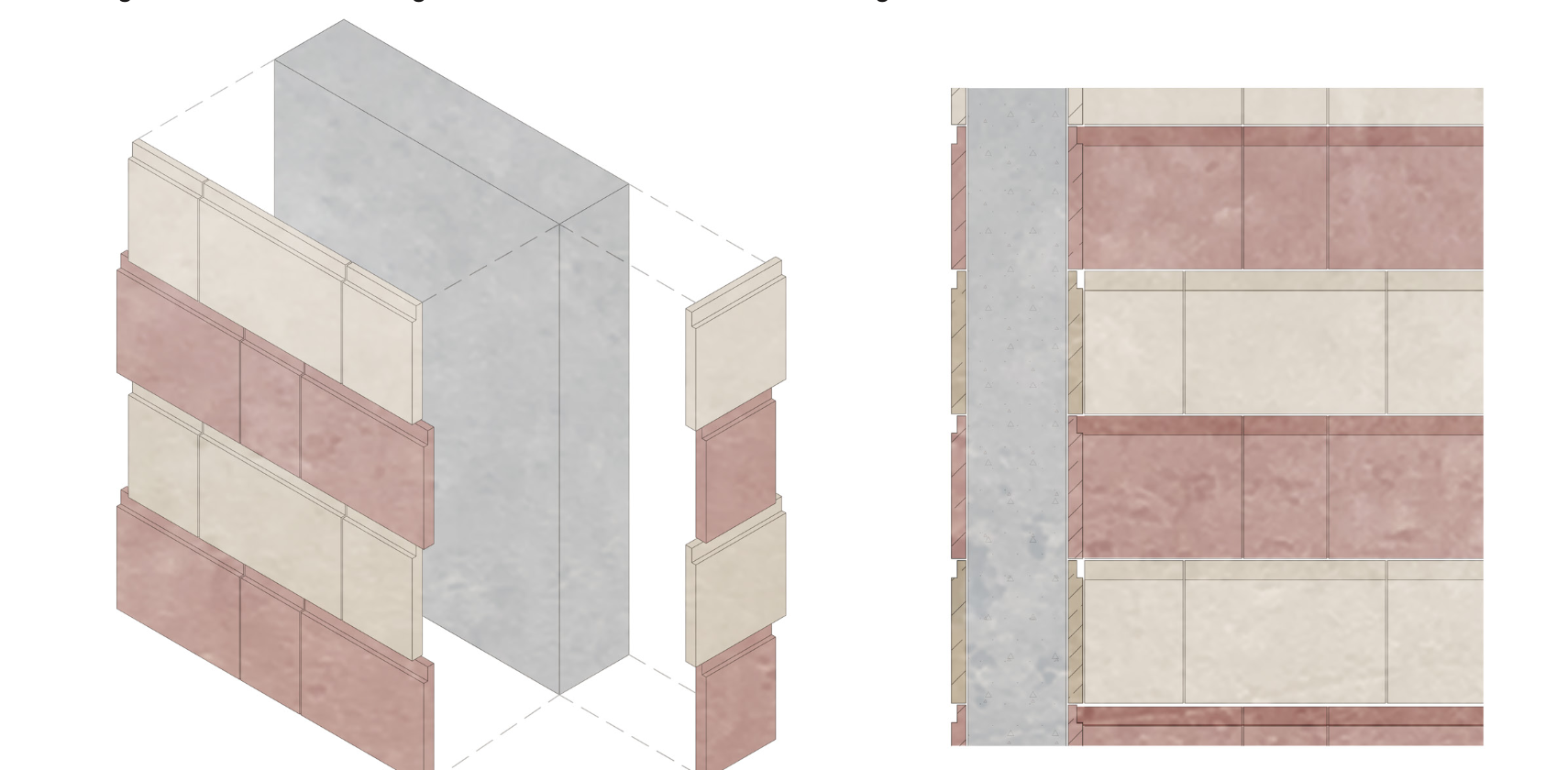
No1 Poultry construction
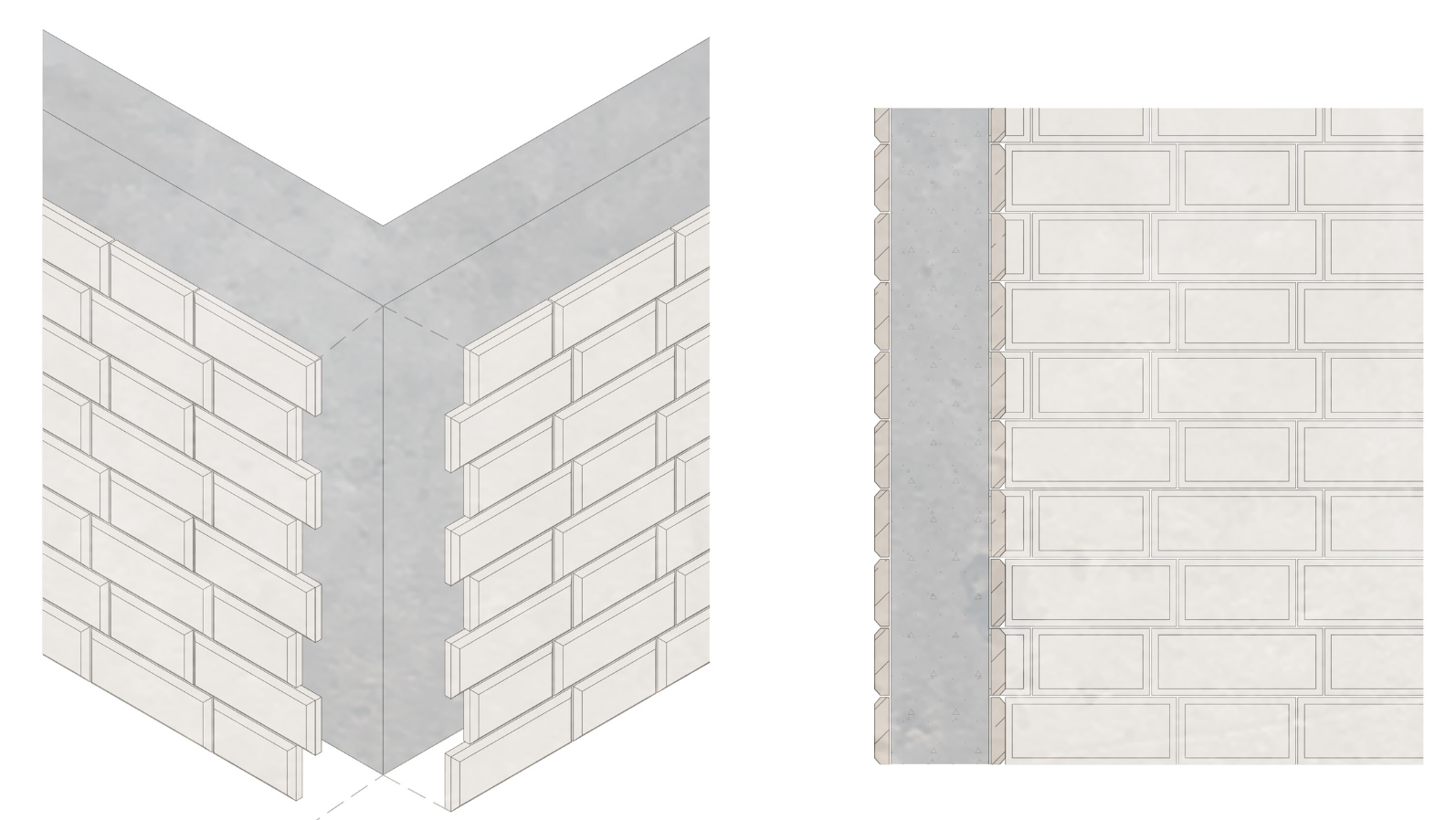
Stone cladding construction
Therefore, the contrasting nature of No.1 Poultry is emphasised, it has misconceived the building within the surrounding context visual representation. Rather than supporting this visual tectonic approach, Stirling’s attitude to tectonics is more honest because he expresses the marks which reveal how things were done. The stone panels are expressed, contrasting in visual appearance, mortar lines unfilled and fixing the panels to the structure creates an honesty to construction. Allowing the stone panels to be articulated separately from the structure expresses the art of construction rather than questioning whether it is stone cladding or load-bearing. This is lost within the other stone-clad building because their visual representation of the facade acts like decorative details of a stage set hiding the way it was constructed. This has to be merited as these dishonest façades are the only reason why they fit within this context due to their manipulation of the Layperson’s experience.
Despite Stirling’s honest approach, because of the visual appearance and haptic qualities being so dominant and contrasting to the context, the Layperson struggles to apprehend any understanding or acknowledgment to the proposed Locus (including Classical reference) which Stirling intended. Architectural experiences mainly consist of approaching or confronting a building rather than the formal analysis of a façade. Therefore, due to the contrasting tectonic approach, appearance and the Layperson only being able to confront the building rather than break down the Classical principles of the façade, ultimately creates an unpleasant experience towards the building.
Load bearing stone construction
I would argue No1 Poultry situates itself well within the site as the design embraces Classical principles through abstracted architectural forms continuing the architectural language. Taking an honest tectonic approach by expressing the stone panel, the building enhances the surrounding buildings quality by reinforcing their architectural presence. It could be argued that the use of load-bearing stone construction being threatened or marginalised by political, cultural, economic and technological developments in the 19th and 20th Century drove the surrounding buildings to use stone cladding. However, this did not influence Stirling’s desire for tectonic honesty and only emphasises his achievement on this site. Listing the building aims to develop the Laypersons experience, understand and share the successes of the building, ultimately sitting more comfortably in its context and enhance the surrounding buildings which it was intended. Architecture has become less about anchoring spatial experience through a fundamental response to material and more to do with the associative qualities of a shape selected. This is driven by the surrounding stone-clad buildings which condition the space. Due to this misleading effect, some innovative pieces of architecture particularly No1 Poultry have been disregarded because of their appearance. However, if this evolution of architecture does not occur buildings will still be criticised and disregarded despite enhancing the quality of a place and could ultimately lead to architecture freezing in time. I believe Stirling’s No1 Poultry establishes itself within the context and deserves its listing and achievements. Despite the initial experience perceived, Stirling knew his approach would be honest and with the use of stone would allow the building to sit in respect to the prolific site. The building is a remarkable and confident piece for its time now and future, renewing the old by unfolding the new.
References
Baker, Geoffrey H, The Architecture of James Stirling and his partners James Gowan and Michael Wilford (London: Routledge, 2011), pp.211-397
Twentieth Century Sociery, Listing Application for 1 Poultry, (2015), <https://www.c20society.org.uk/wp-content/uploads/2016/11/Listing-Application-for-1-Poultry-FINAL.pdf> [accessed 29 October 2020]
Frampton, Kenneth, and Cava, John, Studies in Tectonic Culture (Chicago, Ill: Graham Foundation for Advanced Studies in the Fine Arts, 2001), pp.1-389
Historic England, No.1 Poultry, (2016), <https://historicengland.org.uk/listing/the-list/list-entry/1428881> [accessed 1 November 2020]
Pallasmaa, Juhani, The Eyes of the Skin (Chichester: Wiley, 2005), pp.18-78
Rasmussen, Steen Eiler, Experiencing Architecture (London: Chapman & Hall, 1959), pp.10-182
Rossi, Aldo, The Architecture of the City (Cambridge, Mass: MIT Press, 1982), pp.20-161
Sharr, Adam, Heidegger for Architects (London: Routledge, 2010), pp.91-115
St. John Wilson, Colin, “Poultry No.1. Evidence in favour of the Stirling and Wilford project to be submitted at the Public Enquiry, 24 May 1988”. Zodiac 1990, No 3, pp.84-96