

15 Clerkenwell Close - London - Study
When considering architectural design, context is something that needs to be acknowledged and responded to. There are many elements which contribute to the context of a place; however, this is shaped by factors such as historical, cultural or political elements to form an identity. Over time, architecture has evolved where old buildings have been demolished, remodelled and rebuilt forming the context we inhabit today. Due to this, historic identities have been reshaped or lost by architecture which only responds to the physical context.
In the contemporary world, Architects have recognised this and now look at a new morality of content by analysing, researching and responding to history through architectural narrative. In many instances, this constructed narrative dictates the architectural form but, in some instances, it could also dilute the character of a place rather than enhancing it. A project subject to heated debates around this topic of context was 15 Clerkenwell Close by Amin Taha. Despite the project’s ambition connecting to the site’s history and identity, the building received a large amount of criticism resulting in multiple demolition notices. The main factors which drove this was the contrasting use of stone and archaic appearance against the physical context. It is this argument I want to analyse and question to understand whether this proposal renewed the old by unfolding the new, preserving the historic nature of the place or something which denies history and context. This will be done by investigating the materiality, form and appearance from a phenomenological perspective as a tool to develop a link between the building and its context. Doing this will determine the success of the project at that level of understanding.
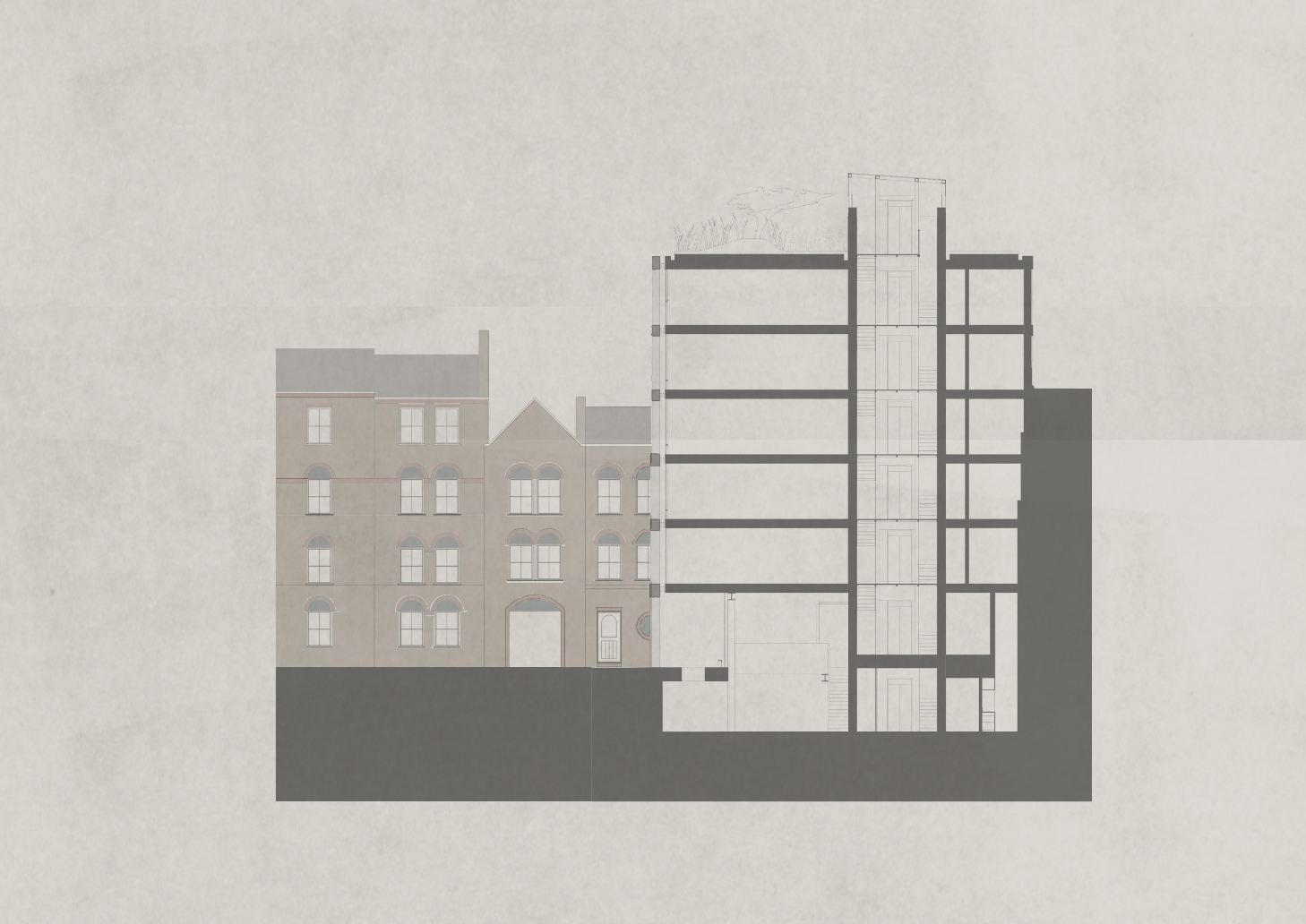
Site Section
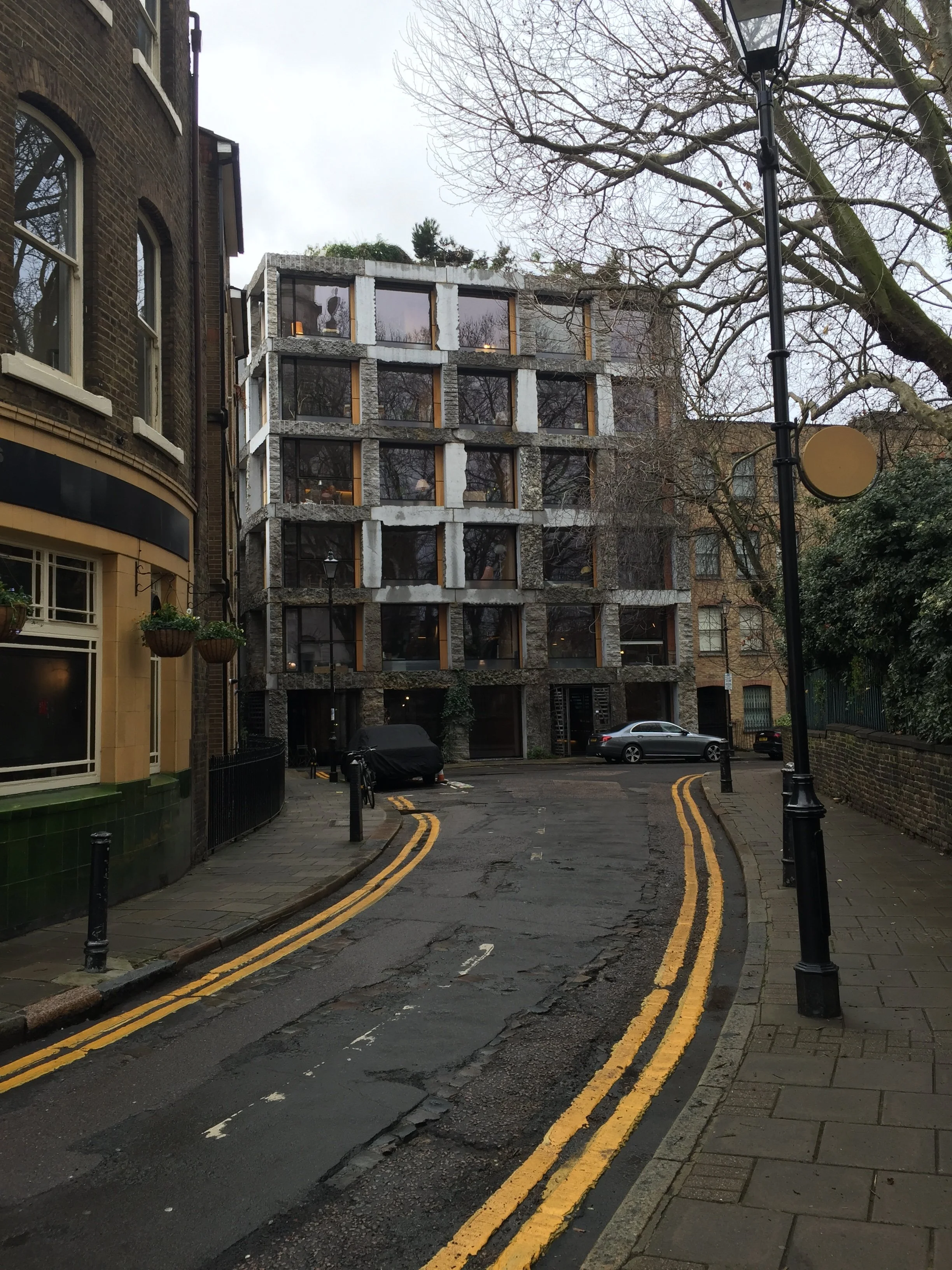
Site Photograph
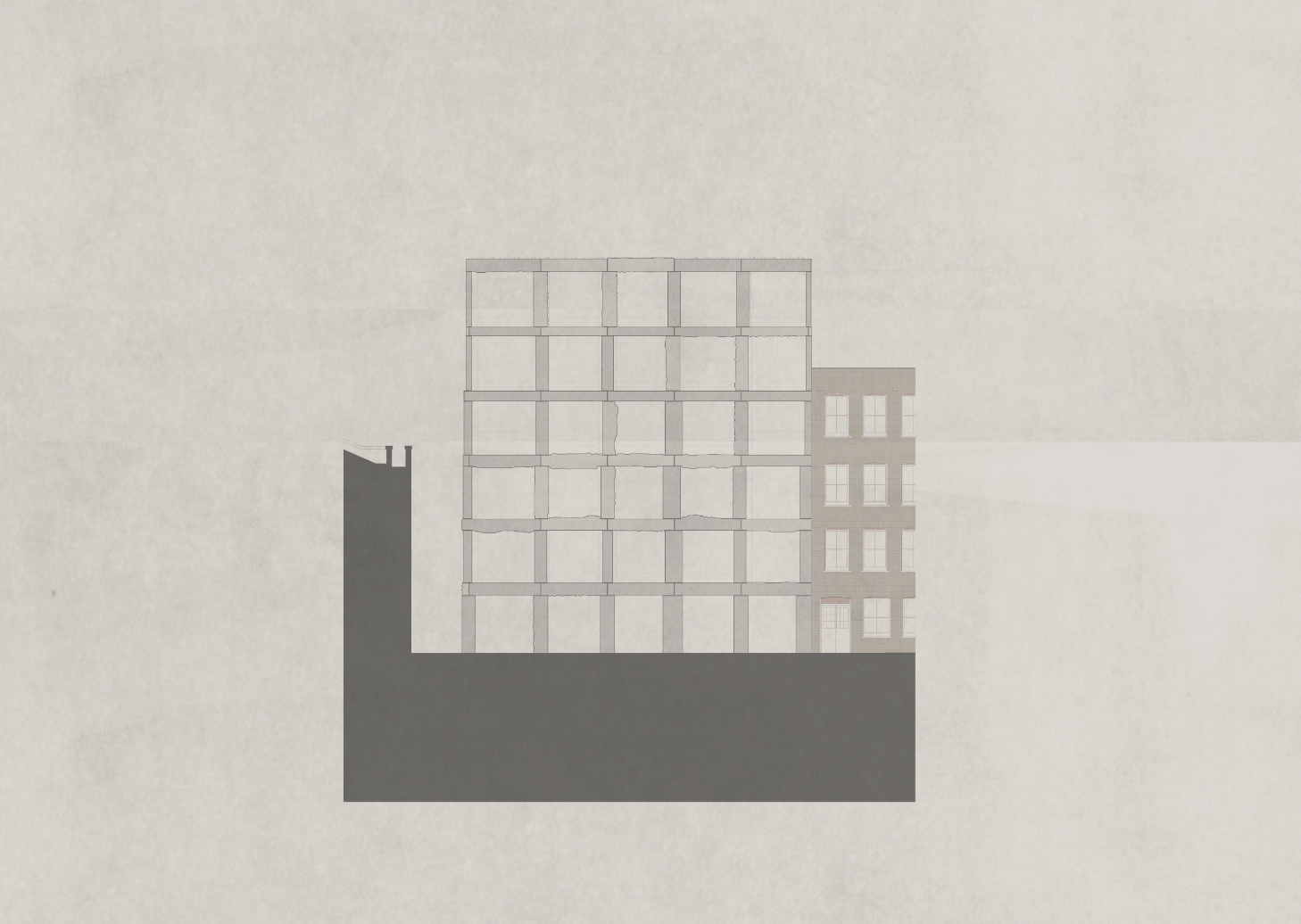
Site Elevation
15 Clerkenwell Close is an office and residential scheme designed by Groupwork, formerly known as Amin Taha Architects. This project started in 2012, finally completing in 2017. The site based within the Clerkenwell Green Conservation area, London adjacent to the Grade II* Listed St. James Church on Clerkenwell Close. The design was driven by a ‘loose-fit’ column-free floor plates that allow for a future change of use. It is built within a historic site that contained the grounds of an 11th Century Nunnery of St Mary of Augustinian Canonesses. The Normans mainly influenced this historic site through a range of limestone buildings and an Abbey where St James Church sits now. Over time this site has been altered and remodelled by multiple revolutions leaving a small amount of the original stone remains of the Abbey and Nunnery. Most of the site was destroyed in the Clerkenwell fires, one in 1970 and the other in 1974 with only a few stones and the road layout was left as a memory of the Nunnery. With such a rich history and identity, Groupwork wanted to use it as the proposal’s narrative. They decided to implement this narrative within the character of the façade, using limestone blocks straight from a quarry.
In doing this, the stone had a natural form and finish, creating an archaic appearance representing something that could have been built in the past. Despite this distinct identity and narrative, the form and use of stone created a contrasting appearance against the physical context. Following its completion, Islington Council felt the proposal was out of keeping with its historical and physical context, nothing like the approved planning drawings. This led to a demolition notice in 2017 stating the building must be rebuilt in brick to match the approved planning documents. Following some dispute from the Architect, the notice was withdrawn. This led to a second demolition notice a year later stating the building does not reflect the proposal that was granted planning permission in 2013, sitting out of place to its physical context. This criticism from the Council and public caused a large amount of social and cultural debate within architecture, with Taha driving the disagreement over the building’s appearance. Further investigation is required to understand why Islington Council would enforce a demolition notice against a building influenced by a specific site’s identity and history.
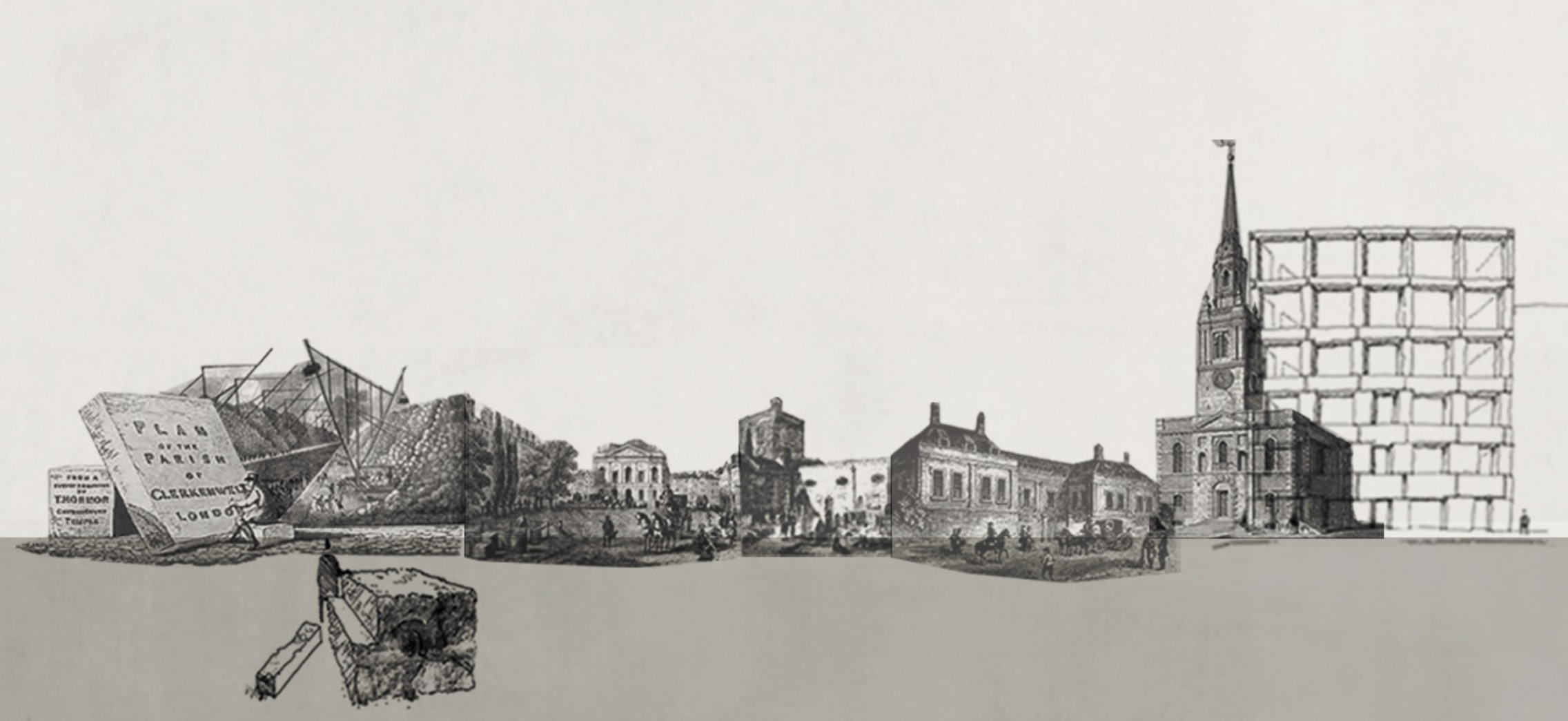
Site identity collage
The main elements that need to be explored to understand the proposal’s relationship to the distinct context is the stone identity on the site, appearance and materiality. The key factor which drove this project is the historical identity of the site, mainly the 11th Century Norman Nunnery and the Norman use of stone. Due to the time it was built, this identity has lost overtime physically as the site was altered and rebuilt multiple times. To understand this evolution, we explored in collage the key characteristics that formed the site’s identity over time. The main aspects indicated is the use of stone, extraction, construction, historic stone architecture, and St James Church. Each of these elements is connected by the use of stone being the main characteristic principle forming the identity. This drove the proposal’s narrative, ultimately trying to become an extension of the site, bringing back an identity that is now hidden.
This historical context and identity is acknowledged in the councils guidelines explaining that the fabric of the area was mainly influenced by stone developments of the Normans. This was main focus in responding to the site implementing this narrative within the Façade. The expressed the natural form/finish of the stone drove an archaic appearance implying that it could have been built in the past. This formed a link between the stone church and the building creating a physical relationship between the two. However it is necessary to question how ambiguous this connection is and whether the layperson can understand these moments. Due to the contrasting appearance of the building within the site it could create an unpleasant experience determines whether connecting to this narrative should be used to determine the project’s success.
With its distinct physical appearance contrasting against the rest of the site, depicting the Islington Council core strategy and conservation guidelines could allow an understanding of how the proposal responds to the rest of the site physically. The key point which the proposal could respond to is: preserving and enhancing the area’s unique character and appearance typically heritage assets including the Norman examples of surviving buildings.
The buildings built by the Normans between the 11th and 12th Century indicate a level of precision, accuracy and detail by the way they were constructed and assembled. Due to the quarrying techniques, transport and fixing methods, Norman buildings had to be constructed out of small stone elements using hand tools. At the time removing small stone elements from the quarry was easier for transportation by horse and to build as there were not many techniques to lift large pieces of stone. Due to these factors, Norman architecture was very precise and layered through the construction of stone buildings. Compared to 15 Clerkenwell Close, there is a significant difference in scale and detail. This was mainly down to the simple and regular form of the stone proposed becoming quite archaic, different from Norman architecture.
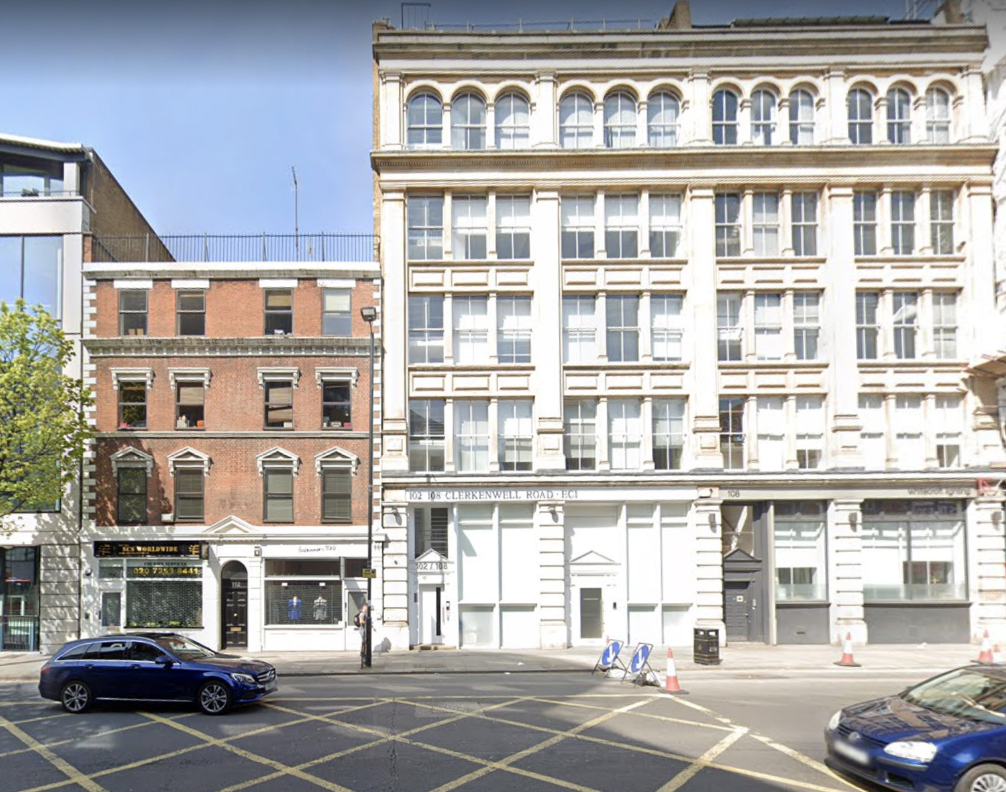
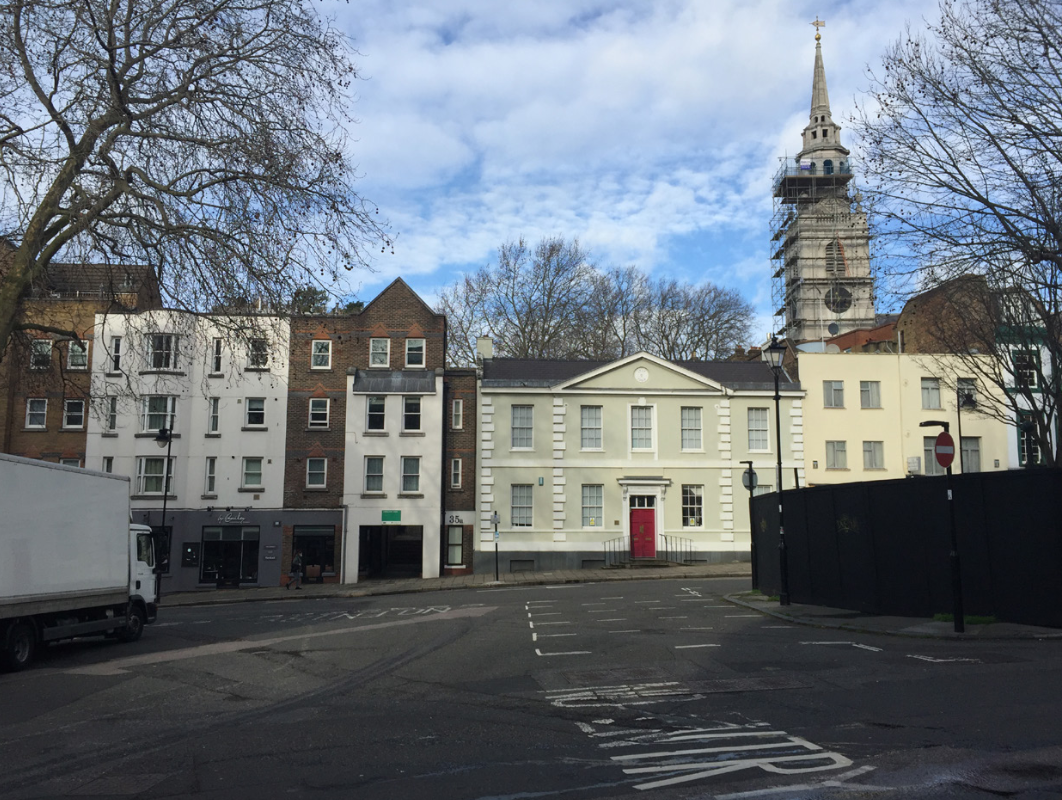
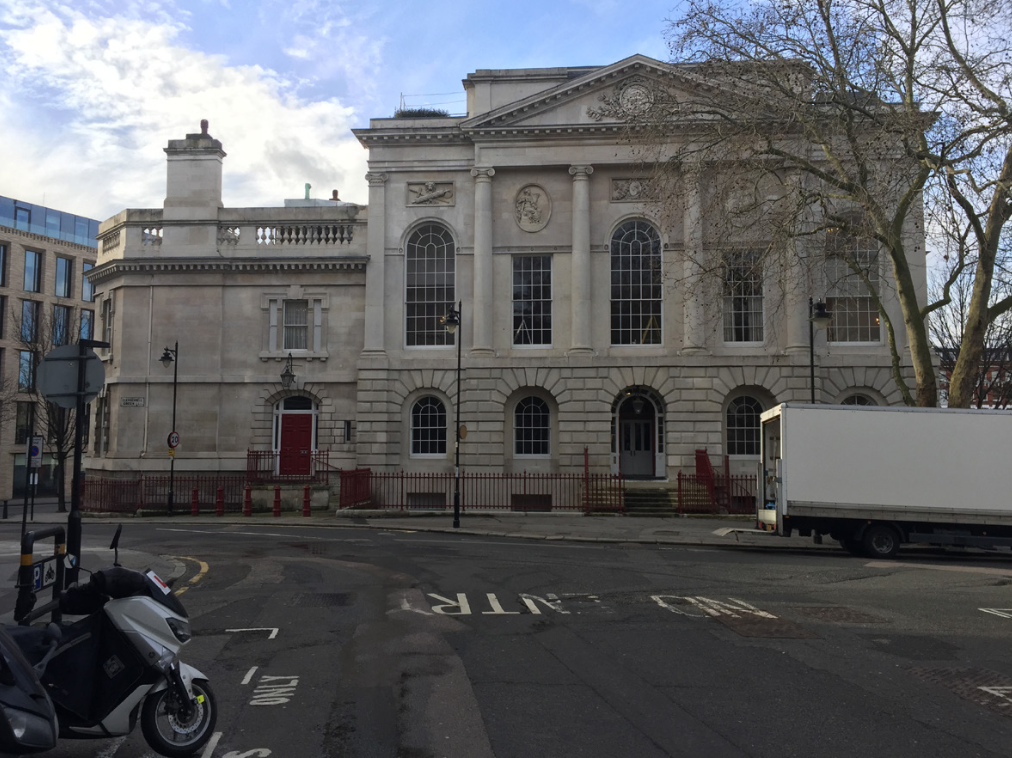
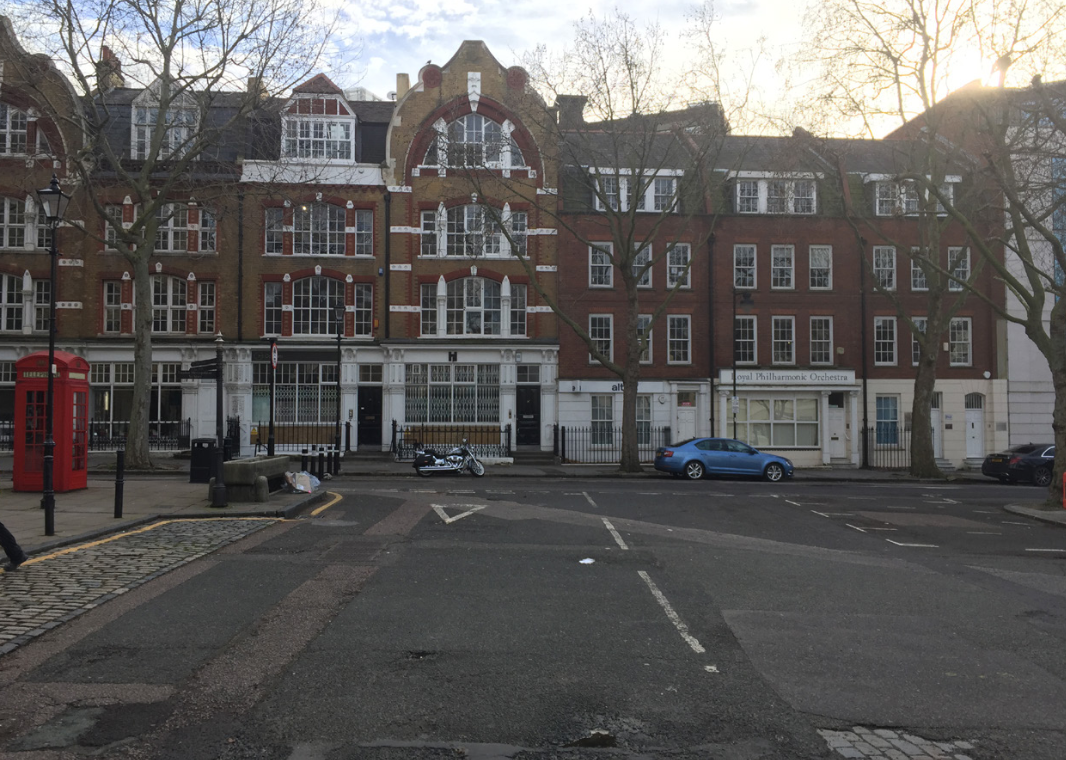
Use of stone in context
It could be argued that architectural elements was used to create a physical connection to the immediate context. This was done by trying to match the use of stone within this conservation area, mainly through expressed stone lintels. These stone lintels predominantly sit above the ground floor or repeated across the façade. This forms a physical relationship throughout the site creating a range of horizontal banding or string courses. These horizontal lines could be understood within the immediate context through the window cill and head level which could be followed. The repetition of these elements becomes rhythmic, following it you can experience regularity and a sense of rhythm. In doing this, the building has some architectural connections physically to the context; however, due to this being quite abstract, would the Layperson understand this connection? The surrounding buildings have a clear articulation between the lintels and the brick face, creating a coherent rhythm and elevation within the immediate context. Therefore, by implementing a grid where architectural elements of the horizontals and verticals are not articulated, any physical connection to the site is abstracted to the Layperson. This ultimately gives a very different feeling proportionally to anything Classical or traditional forming a dominant yet unsettling, questioning why this form was approved. Upon further investigation, this grid façade was granted planning permission in 2013 but, the proposal was shown in brick. Therefore, as the material was the only thing that changed following approval, raises two prominent issues. Is materiality the only issue within this context or was the narrative forced into an architectural form only because it was approved?
As explored, the main reason the proposal came under a large amount of criticism was due to its materiality. Christopher Alexander in A New Theory of Urban Design (1987) explains the character of “every project must first be experienced and then expressed as a vision” which can be seen by the eye, communicated to others, and felt by others. If not embodied Layperson will question its fundamental position of: What is it? Why has it been done like this? Due to the use of stone being contrasting to the eye physically and metaphorically, the Layperson does not acknowledge or comprehend any relationship to the context. There is a clear dominance and difference between the stone and brick colour / haptic qualities. This is emphasised as the use of brick being the primary material across immediate context.
The way of understanding space, we need to experience the patterns of elements within a place. These patterns are the elements that buildings are made of and if this pattern is broken then their character can be lost. With the use of brick being this physical pattern, it defines the place’s experience and feeling because it can be experienced and understood by the Layperson. Breaking this with stone creates an instant disconnection with the immediate context and ultimately drove Islington Council to demand its demolition. Islington Council outlines that the existing character of the area depends on the survival of a range of vernacular building materials that are mainly brick with slate/tile roofing. This is remarked by them as ‘important’ so that all new buildings blend in with the physical context and reinforce this character. Due to this, it could be argued that the building does not respond to the vernacular of the site and the narrative appears to be forced into an architectural form only because it was approved at planning.
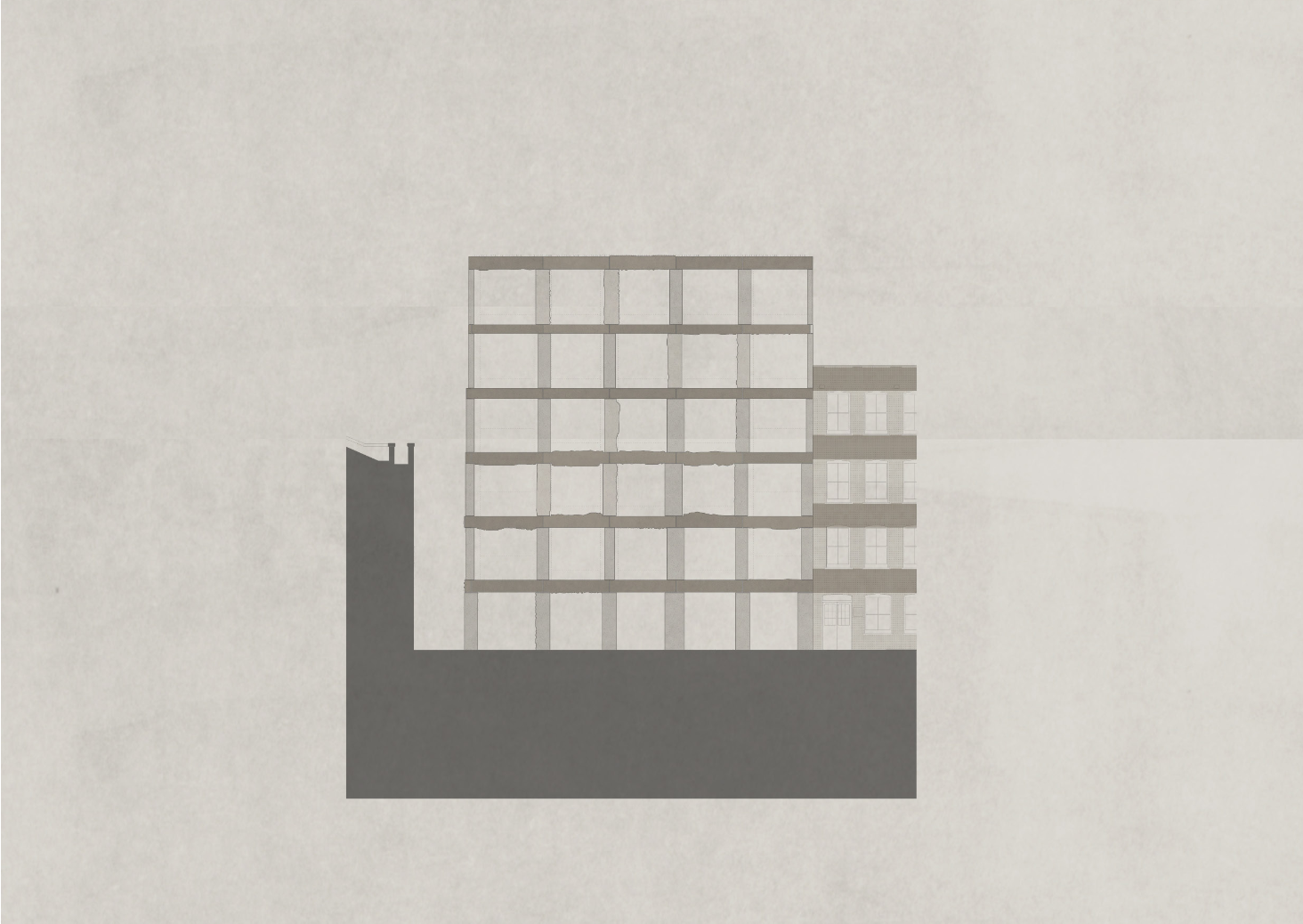
Elevation horizontal banding
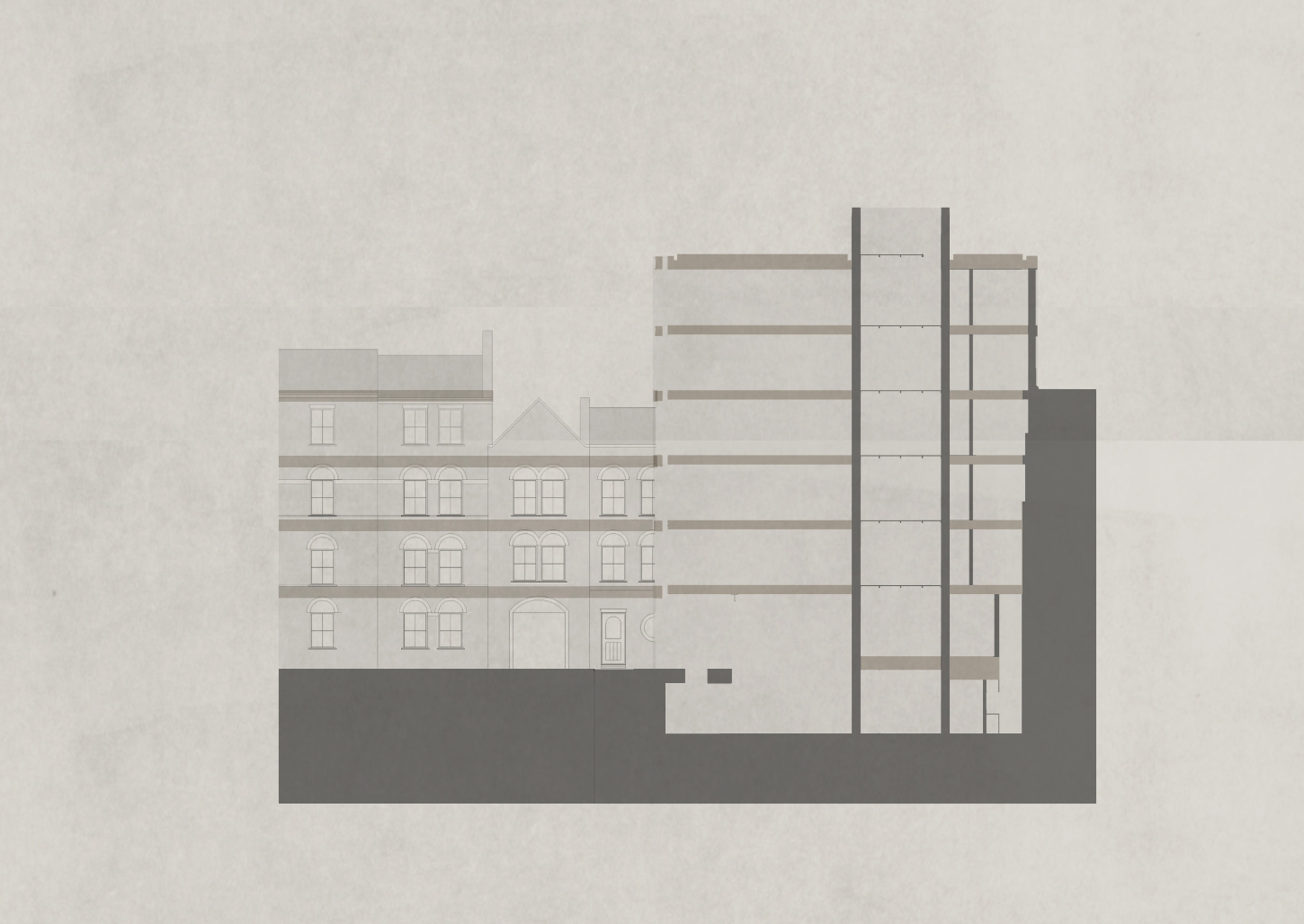
Section horizontal banding
From my research and experience of 15 Clerkenwell Close it is a controversial building due to its use of stone in contrast to its context historically and physically. Not only is the use of stone different to the brick surrounding buildings, but it also dictated a narrative trying to connect to the 11th Century Norman Nunnery, Abbey and stone architecture on the site. Because of this, the narrative and the somewhat fixed façade design feel like they have been forced together resulting in no connection to the context, creating an unsettling experience of the Layperson. It has to be recognised and commended Taha’s achievement gained through the use of stone, sustainability benefits and innovation; however, with this driving the narrative, merged into a façade designed for brick ultimately diluted any potential character and digit the sustainable benefits if it had to be demolished. This is an ongoing issue within Contemporary architecture, where there is a disconnection between the Architect and the Layperson because of these unresolved ambiguities which they cannot understand when left isolated. This was the outcome of the proposal ultimately creating an unsettling human experience. Despite this, Taha was able to convince the Council and the Planning Officers on the proposal’s successes mainly because of the narrative, finally dropping the demolition notice. However, this does not hide the errors created by the Architect and Planners. Both being quick to criticise each other and the planning process that ended up being ignored, one issue overlooked was the design of the grid façade.
This is important as if it was made from brick as approved by the planners, the building still would have created an uncomfortable experience due to the grid lacking any architectural relationships. This is interesting because the main problem outlined by the Council was the materiality however, the design and appearance of the grid was the main issue. If both Planning Officers and the Architect identified this earlier, the building might have been more acceptable to society.
In conclusion, I believe Taha had good intentions for the proposal but, it ultimately contrasts and disrupts the historical and physical context forcing an unsettling experience to the Layperson. This idea of trying to make a new ‘morality of content’ appears to have influenced a majority of Contemporary Architects resulting in some buildings lacking in character or architectural presence. Because of this, Taha forced a narrative into a form that was ultimately inappropriate for the site diluting the historic nature or identity. Contemporary architecture has come into a phase of forcing narratives deliberately to be innovative using conservative approaches as an excuse. Because of this, some pieces of architecture result in disrupting the historical and physical nature of places rather than persevering or enhancing it.
It could be argued that the restrictions and guidelines set out by the Council takes a conservative approach to planning which could hinder the future evolution of the place. This only allows Architects to copy the physical context as a way into the design and in this specific location has ultimately been influenced by a context remodelled in the 1970s and 80s which has no relationship to the history of the place. With out of proportion architectural elements and lack of acknowledgement to the site’s identity, the surrounding buildings dilute the site’s real heritage. Architecture in the past Century has adopted a psychological strategy of trying to persuade, turning into image products detached from identity. This raises issues and questions why should Architects relate to something which dilutes and conditions the identity of a place. This is a valid point as if the building was independent of planning policies, the building would be successful achieving what it aimed to achieve. Furthermore, potentially enhancing the architectural quality of the surrounding buildings through its contrast of appearance and materiality, improving the overall context. It has been highlighted that if they used bricks to match the physical context’s materiality, the sustainability impact compared to using stone would have been exponential. The outcome of using stone resulted in being 10% of the carbon footprint, significantly cheaper, quicker to build and ultimately tries to respond to the history of the site. Despite these key arguments favouring the proposal, because of the lack of elements that the Layperson can understand, the building becomes unsettling and contradicts the site rather than enhances it regardless of its sustainable benefits. All these ideas appear to have good intentions behind them driving the narrative, but as they are ambiguous, they cannot be understood. It rather reaffirms the questioning has the form of the building (approved by the Council) and the narrative just been merged to try and make an interesting/innovative piece of architecture. Despite all these factors, materiality seems to be the main driving factor behind the narrative and due to this alteration, it became the main problem for the Council.
References
Architects Journal, AJ Lecture: Amin Taha (2018), [video] <https://www.youtube. com/watch?v=-LTRxOc6q8k&t=1710s> [Accessed 2 January 2021]
Alexander, Christopher, A New Theory Of Urban Design (New York: Oxford University Press, 1987), pp.1-229
Alexander, Christopher, The Timeless Way Of Building (New York: Oxford University Press, 1979), pp.7-157
British History, Clerkenwell Close Area: St James Clerkenwell (2008), <https://www.british-history.ac.uk/survey-london/vol46/pp28-114> [Accessed 2 January 2021]
Frampton, Kenneth, and Cava, John, Studies in Tectonic Culture (Chicago, Ill.:Graham Foundation for Advanced Studies in the Fine Arts, 2001), pp.1-389
Groupwork,(2017), <http://groupwork.uk.com/#> [Accessed 3 January 2021]
Hackman, Gill, Stone to Build London, Portland’s Legacy (Farleigh: Folly, 2014), pp.5-255
Islington Council, Conservation Area Design Guidelines (2002), <https://www.islington.gov.uk/-/media/sharepoint-lists/public-records/planningandbuildingcontrol/information/adviceandguidance/20192020/20190911ca01clerkenwellgreen.pdf>[Accessed 2 January 2021]
Islington Council, Islington’s Core Strategy (2011), <https://www.islington.gov.uk/-/media/Sharepoint%20Lists/Public%20Records/Planningandbuildingcontrol/Publicity/Publicnotices/20192020/20190821CoreStrategyadoptedFebruary2011>[Accessed 2 January 2021]
Islington Now, Islington residents clash over Architect’s £5m office set to be demolished (2019), <http://islingtonnow.co.uk/row-after-4milion-building-ordered-demolished/> [Accessed 4 January 2021]
Pallasmaa, Juhani, The Eyes of the Skin (Chichester: Wiley, 2005), pp.18-78
Rasmussen, Steen Eiler, Experiencing Architecture (London: Chapman & Hall, 1959), pp.10-182
Rossi, Aldo, The Architecture of the City (Cambridge, Mass: MIT Press, 1982), pp.20-161
Sayer, Jason, Amin Taha Wins Fight To Stop 15 Clerkenwell Close Demolition, The Architects Newspaper (2019), <https://www.archpaper.com/2019/08/amin-taha-wins-fight-stop-15-clerkenwell-demolition/> [Accessed 3 January 2021]
Tafuri, Manfredo, L’Architecture dans le Boudoir, The Language of Criticism and the Criticism of Language (1974), pp.37-62
Deezen, Watch Amin Taha explain the thinking behind his controversial 15 Clerkenwell Close home (2018), [video], <https://www.youtube.com/watch?v=MioesshyeBM> [Accessed 2 January 2021].
Wilson, R, Heralding The New Stone Age: Amin Taha’s 15 Clerkenwell Close, The Architects Journal (2019), <https://www.Architectsjournal.co.uk/buildings/heralding- the-new-stone-age-amin-tahas-15-clerkenwell-close> [Accessed 2 January 2021]